Explore
Hololio Polo
OUR SPORTING HERITAGE
Hololio Polo embodies a proud legacy of equestrian excellence and spirited competition.
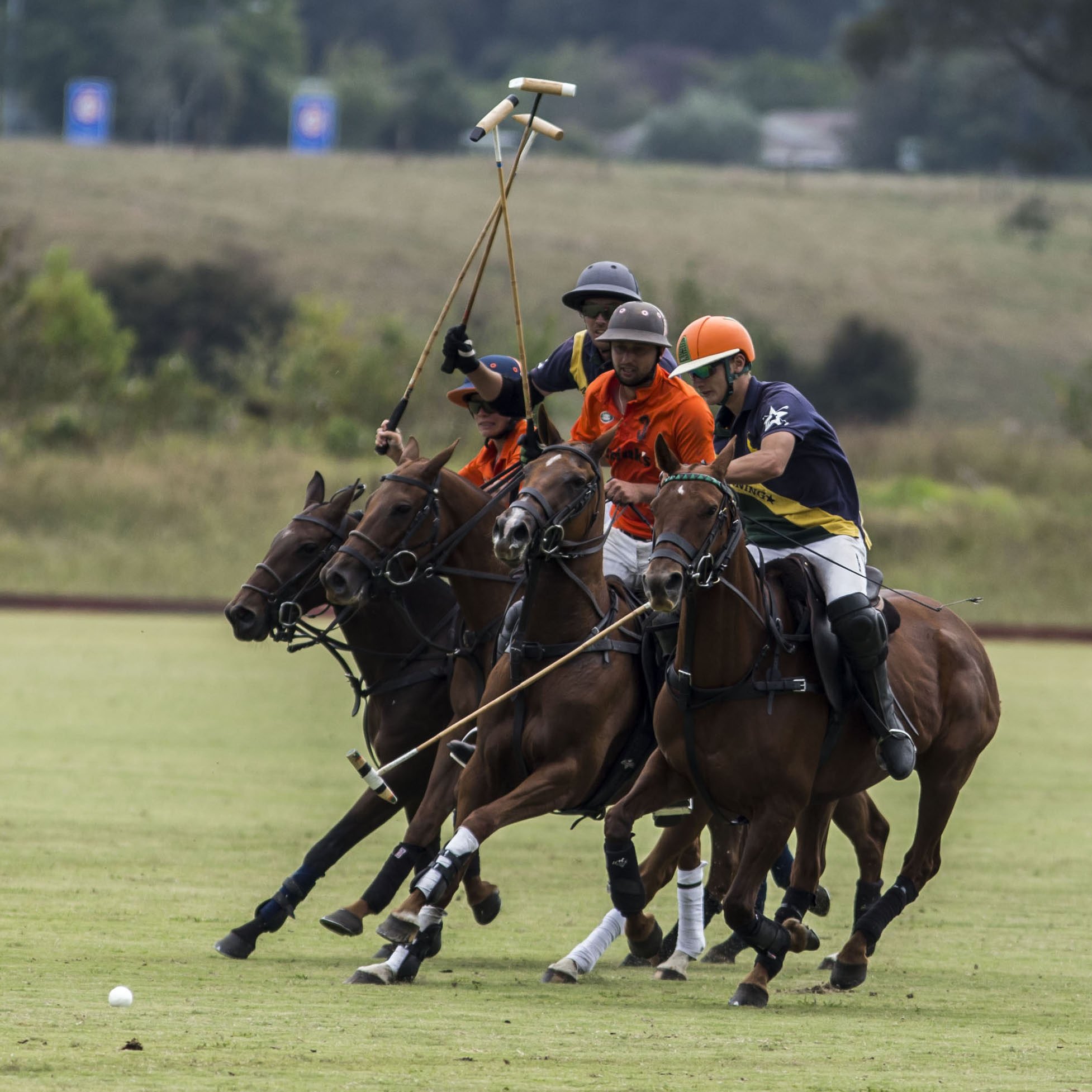
Since its establishment in 1981 by six-goal international professional Nick Jones, Hololio has grown from a private club into a team of distinguished players. Here, polo isn’t just played — it is lived: through weekend chukkas, high-energy tournaments, and a community that honours the sport’s heritage while embracing its evolving future.
Our Legacy
From its founding by an internationally recognised professional to hosting visiting dignitaries — including two visits by Prince Charles in the 1980s — Hololio’s polo story is one defined by passion and performance.
Today, the club remains a cornerstone of polo in the Auckland region. It supports a programme of tournaments, practice chukkas and competitive play, and its teams have represented the estate with distinction in top-level events, including victories at national tournaments.
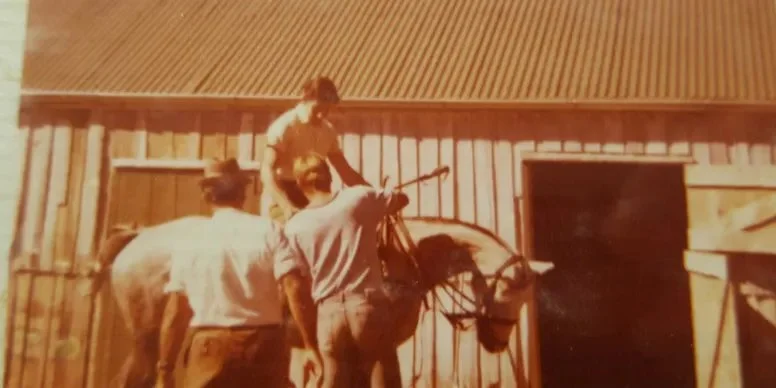
Prince Charles visited in 1983 and again in 1984 - pictured here on the grey, outside the historic Munro woolshed, which at the time functioned as Nick's polo stables.
Polo: The Sport
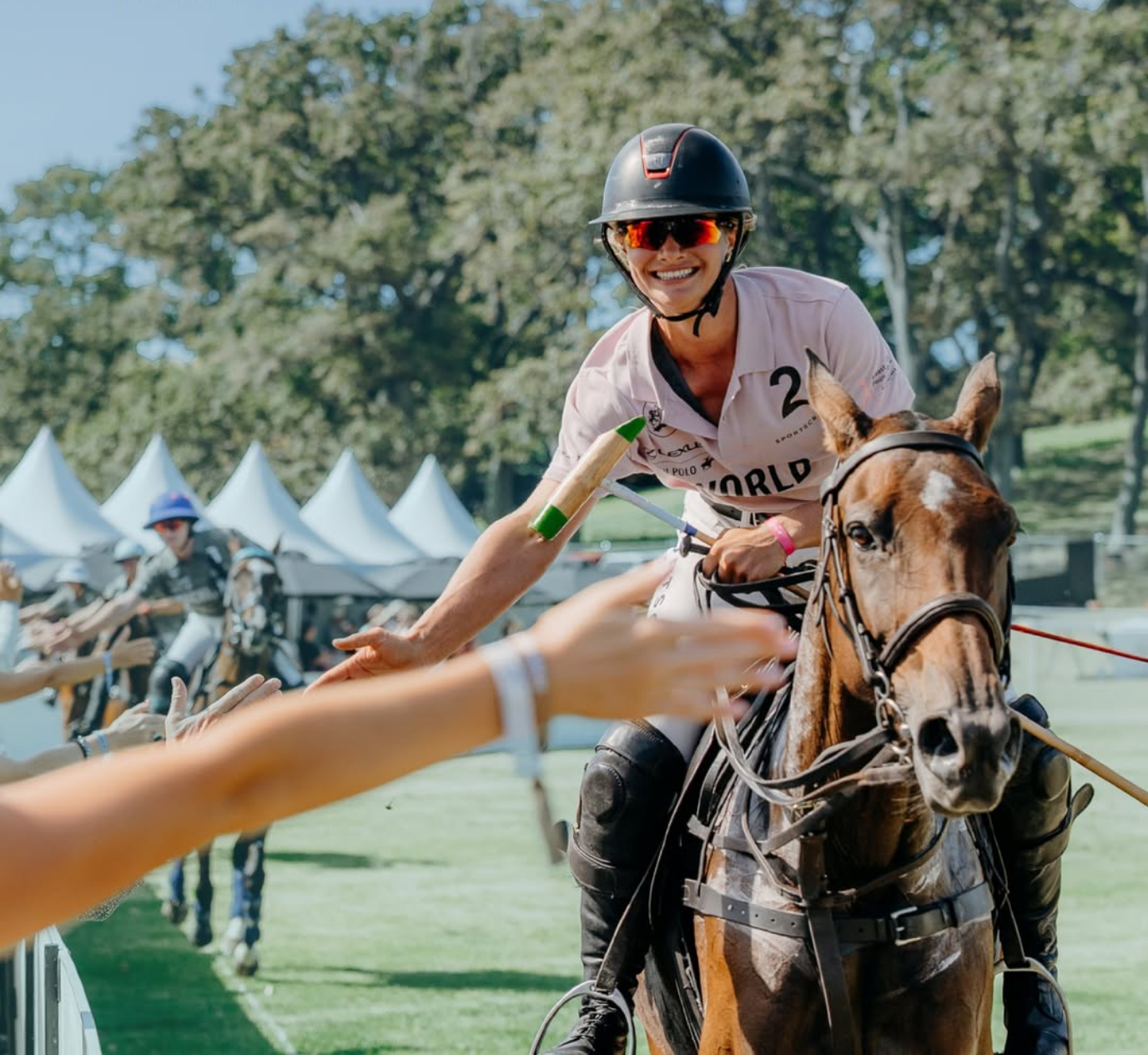
Polo is a game of extraordinary athleticism, precision and partnership. Four riders on each side compete across a field through a series of chukkas — short, fast-paced periods of play in which skill, strategy and elite horsemanship bring the game to life.
Renowned as the “sport of kings,” polo demands rigorous training and keen tactical acumen. Hololio champions this heritage while welcoming all who seek to learn, watch or engage with the sport at any level. New to polo? Learn more below:
-
A chukka is a period of play in a polo match, typically lasting seven minutes of active time. Most matches are played over four to six chukkas, depending on the level of competition.
At the end of each chukka, teams change ends. This tradition dates back to the sport’s origins and ensures no team gains advantage from field conditions, wind, or light. Between chukkas, horses are changed to protect their welfare and maintain peak performance — a defining feature of polo’s elite horsemanship.
-
Goals are scored when the ball is struck cleanly between the two goal posts at either end of the field. Each goal counts as one point, regardless of distance or difficulty.
Matches are fast-paced and fluid, with momentum shifting quickly as teams contest possession through line of the ball — an imaginary line created by the ball’s movement that governs right-of-way and ensures safety at speed. The team with the highest score at the conclusion of the final chukka is declared the winner.
-
Each polo team consists of four players, traditionally numbered one through four, with each position carrying a distinct tactical role — from attacking forward to defensive back.
Players are assigned a handicap, ranging from -2 to +10 goals, reflecting their skill, experience and horsemanship. A team’s total handicap determines the level at which it competes, allowing players of varying abilities to compete fairly across tournaments. Handicapping is central to polo’s integrity and competitive balance.
-
Polo tournaments are structured around graded divisions, with teams grouped by total handicap. Matches are scheduled across several days, progressing through pool play or knockout rounds depending on the tournament format.
-
Practice chukkas are informal matches held outside tournament fixtures, allowing players to train, condition horses and refine teamwork in a relaxed but structured environment.
Tournament play, by contrast, is fully officiated and scored, with strict rules governing play, horse rotation and match format. Both are essential to the rhythm of the polo season and the ongoing development of players and horses alike.
-
Bump
A legal manoeuvre where a rider positions their pony alongside an opponent’s mount to gently apply pressure and redirect them away from the line of play. This must be executed at a shallow angle to ensure safety and control.Chukka
A segment of play in a polo match, typically lasting just over seven minutes of active time. Matches usually consist of four to six chukkas, depending on the level and format of competition.Goal
A point is awarded when the ball passes fully between the goal posts, irrespective of which player or pony last made contact with it.Hook
A defensive action in which a player intercepts an opponent’s striking motion by using their mallet to block the swing before contact with the ball is made.Knock-In
When the ball travels beyond the back line, play is restarted by the defending team, who return the ball into the field from that same line.Line of the Ball
An invisible pathway created by the direction of the ball after it has been struck. This line establishes right-of-way for players and is fundamental to maintaining safety at speed.Mallet Head
The striking end of the polo mallet. The broad face is used to make contact with the ball, allowing for controlled and accurate shots.Nearside
The left-hand side of a polo pony — traditionally the side from which all play and striking is conducted.Offside
The right-hand side of the pony, opposite the nearside.Penalty
A free hit awarded following a foul, taken from a distance determined by the nature of the infringement. Penalties are primarily enforced to protect both horse and rider and to preserve fair play.Player Positions
Each team fields four players, numbered one through four, with defined roles:Position 1 — Predominantly attacking, focused on scoring opportunities
Position 2 — Offensive support with defensive responsibilities
Position 3 — Strategic leader and primary playmaker
Position 4 — Defensive anchor, protecting the goal
Ride-Off
A permitted contest where two riders come together side-by-side, each using controlled contact to prevent the other from gaining a clear strike on the ball.Side Boards
Low boards running along the length of the field, designed to keep the ball in play and maintain the pace of the game.Stick
Common terminology for the polo mallet.Swing
The act of striking the ball, executed through a range of recognised shots including forehand, backhand, neck and tail shots.Tack
The collective term for all equipment fitted to a polo pony, including saddle, bridle and protective gear.Throw-In
The method used to begin or restart play, where the umpire rolls the ball between two opposing lines of mounted players.
Tournaments & Events
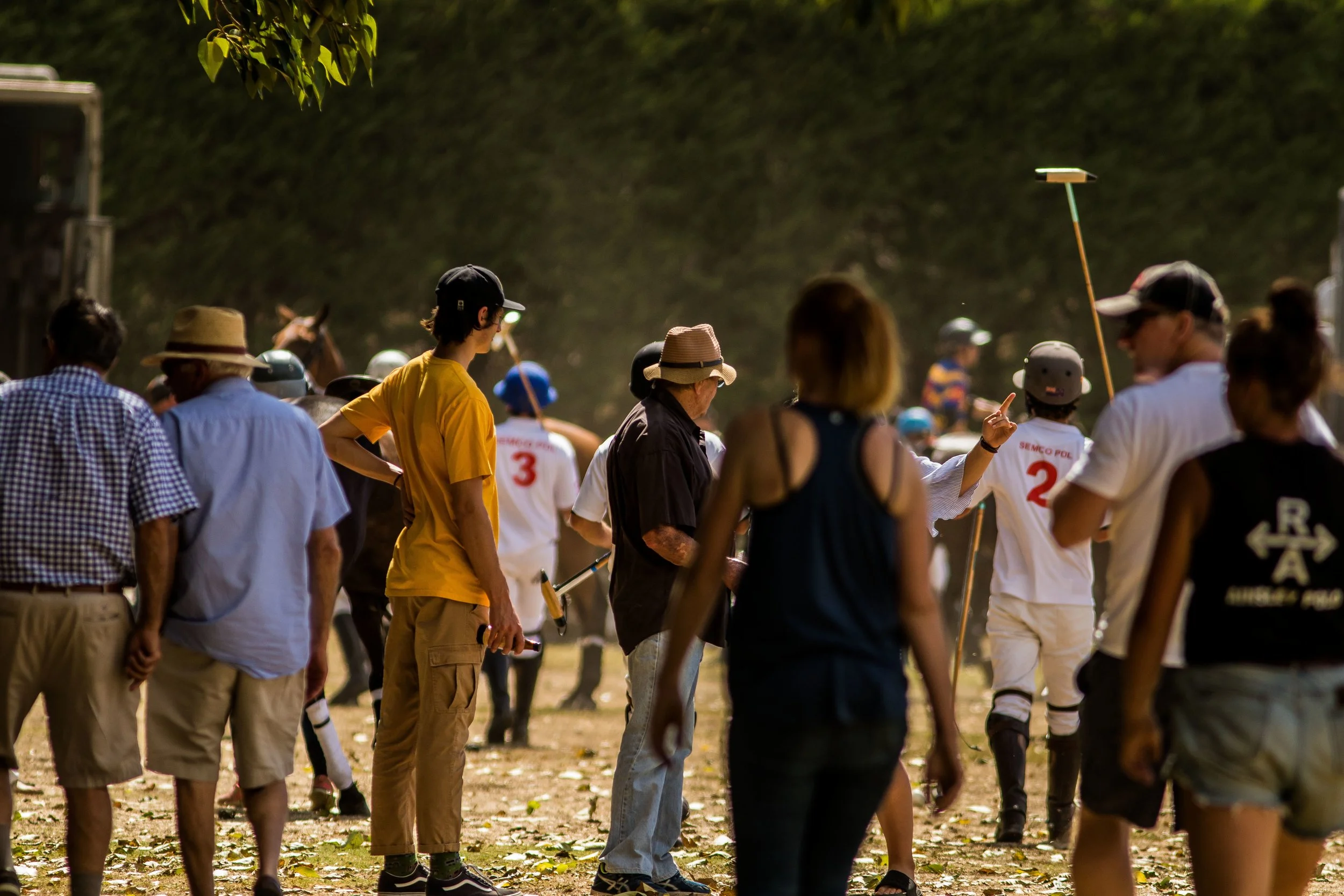
The national polo season features a selection of marquee tournaments and regular playing opportunities across the country, including two major sporting highlights held here at Hololio Estate:
The Guy Kirkpatrick Memorial Tournament — An early season competition honouring a celebrated figure in the polo community.
The Forsyth Barr Polo Masters Tournament — A premium tournament attracting top national and international players.
Find out more about our annual tournaments below
Polo Calendar
Explore the full line up for the 25/26 season:
-
13/14th | Guy Kirkpatrick Memorial Tournament | Hololio
12th | Exhibition Match | Mystery Creek
20th/21st | Hannon Trophy | Cambridge
22nd | Junior Cup | Cambridge
27th/28th | Ladies Tournament | Mystery Creek -
3rd/4th | Ardmore Open Tournament | Sub, 0, 6 & 12 | Auckland
3rd/4th | Waikato Open | Sub, 0, 6 & 12 | Kihikihi
10th/11th | Waimai Tournament | Waimai
17th/18th | Keyte Watson Tournament | Cambridge
24th/25th | Charity Tournament | Sub, 0, 3, 6 & 16 | Auckland
27th/1st | Mystery Creek Polo Week | 3, 6 & 16 | Mystery Creek -
7th/8th | Kihikihi Championship | 0-2, 2-4, 6-8 | Kihikihi
10th-15th | NZ Polo Open | Sub, 0, 3, 6 & 16 | Auckland
19th-22nd | Forsyth Barr Polo Masters | Hololio
24th-1st | Savile Cup | 10+4+0 | Auckland -
7th/8th | NPA | Kihikihi
7th | Urban Polo | Auckland
14th/15th | Walker Memorial Tournament | Bombay
17th/20th | Ambassadors | Auckland
21st | Ladies International NZ v FR 16-18 goal | Auckland
21st/22nd | Auckland Ladies | Auckland
21st/22nd | Lanherne | Cambridge
28th/29th | Brinks Tournament | Sub, 0, 3 & 6 | Auckland
Join us on the field
Whether you’re stepping into the sport for the first time or joining long-standing club supporters, we invite you to witness and participate in the refined tradition of polo at its best. As well as our annual tournaments, you are welcome to pack a picnic and join us at our weekend practice chukkas — Our regular afternoon sessions when we are not hosting tournaments or away at neighbouring clubs
Our Sponsors & Event Partners
A special thank you to our corporate sponsors and event partners: